The framework K has seen a larger presence in the meta as one of the more argumentatively efficient and tricky strategies to gain popularity in debate. The natural response, then, is affirmative framework, which attempts to limit out the links as offense by clarifying the burdens of debate. One of the ways affirmatives attempt to limit the kritik debate is by adopting the standard of truth testing, where the veracity of the resolution becomes the only relevant influence on the ballot.
Seeming to erase the offensive potential of reps-based links, many K teams deem this catastrophic---I tend to disagree. The following article attempts to explore that intersection between what’s right and what’s true, and how an underexplored section of the library could blur the line between phil and the K even further.
Bad Apples and Angry Men
Consider a jury. The whole point of that jury is to figure out what actually happened and determine whether the defendant is innocent or guilty.
Now imagine one of the jurors announces, before any evidence is presented, that he won’t consider any testimony from witnesses of color. Not because he believes that the particular witnesses of color in this case are unreliable, nor because of some evidentiary objection, but rather because he personally believes that the group as a whole is incapable of recollecting an account admissible as evidence.
Has this juror made a factual error, or an ethical one?
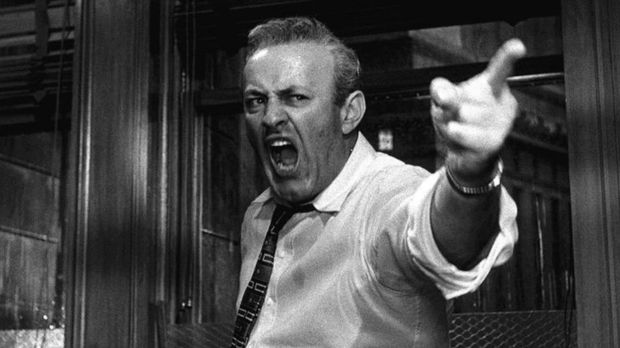
The instinctive answer, one may suppose, is both. But what’s important to recognize is which comes first. Our juror didn’t look at the character of the witnesses and then deem them unreliable, but rather decided that was the case before the process of said deliberation could even begin. Prima facie, he ruled certain groups out of the truth-seeking enterprise before such an enterprise even started.
This is what appears to undermine the veracious nature of the jury process itself: the jury process can only track the truth of the case by operating under the assumption that testimony from any credible witness counts. Rather than creating that conclusion, the process relies on that being the case---if it wasn’t, the deliberation would appear more farcical and probably resemble a performance more than a genuine attempt to discern wrongdoing.
Consider if the trial had gone ahead anyways, relying heavily on witness testimony, and returns a guilty verdict. Would you trust that verdict? Of course not. And not primarily because you disagree with it, but rather because the process that produced it was corrupted at a level prior to any individual piece of evidence. The conclusion might accidentally be correct, but it has no claim to correctness, because it was produced by a method that was never tracking truth to begin with.
The Veracity of Morality
The same structural failure happens when a moral claim is built on biased assumptions.
In David Enoch’s view, moral reasoning is a practice---it can only produce claims with moral authority if certain conditions are met: those that are baked into the very structure of reasoning itself. These foundational commitments constrain the truth-aptitude of moral claims: namely that persons have standing, that their suffering generates reasons, and that differential treatment requires genuine justification rather than mere preference.2
These are not products of our faculties of reason, or the endpoints of reason itself, but rather what characterize moral reasoning to distinguish it from tribal rationalization. A procedure of moral reason that smuggles in the assumption contradistinct to the founding principles of reason itself---that certain groups don’t have standing, that their interests don’t generate reasons, or that differential treatment can be justified by preference---isn’t reasoning from a different set of premises, but is rather a break from the practice of reasoning entirely and is doing something else.
I think this is where a sort of hijack angle for the framework K becomes strategic. While also allowing the link to function as negative offense, it dismantles affirmative offense in a way that breaks impact calculus to the point where risk becomes irrelevant. Beyond just mitigatory defense, this kind of argument disqualifies the affirmative from truth-apt moral claim-making entirely, which represents a much more extreme form of defense that turns risk calculus into a non-sequitur.
Tornadoes and Grilled Cheese Sandwiches
If this argument snuck its way into a framework block, the 1AR would likely push back on the premise that we must accept maxims like “all persons have standing.” Above, we said that this was a “founding principle of reason itself,” but it’s quite easy to question that claim. If the foundational commitments of our deliberative procedures are just arbitrary starting points, the debate devolves from offensive into more of a stalemate between “yuh-huh” and “nuh-uh” in determining which of these moral starting points are preferential. At worst, it becomes infinitely regressive, since there are no easy criteria with which to deliberate between starting points of deliberation without even higher-order deliberative criteria to judge those initial criteria (re-read that sentence if you need), ad infinitum.
So how do we normatively ground our moral starting points? A good starting point is David Enoch’s “robust realism.” Like we said before, Enoch supports the idea that the commitment to the equal standing of persons isn’t a premise we actively choose before the process of deliberation, but rather baked into the process of deliberation itself.3 But why is this the case? For that, we have to examine the distinction between deliberating and merely picking.
Take a coin flip for example. Nobody asks whether they ought to pick heads or tails, but rather just flips the coin, witnesses the consequence, and reacts accordingly. The difference between that and asking “what ought I do?” in the normative sense as opposed to “what do I want?,” you’ve committed yourself to there being a correct answer independent of your current preferences. This condition is called “stance-independence.” A reason, in the normative sense, has force regardless of whether you happen to care about it. Whether or not the tornado outside influences my decision to get a grilled cheese doesn’t mean it’s not a good reason to stay at home.

If a reason indeed only matters because I care about it, then it’s not quite a reason, but more closely resembles a preference that happens to take more importance in your decisionmaking. If reasons have force independent of the reasoner’s preferences, then who is affected by a decision cannot by itself determine whose interests count. You need a morally relevant difference to justify exclusing someone, and group membership alone (notwithstanding a common moral feature which characterizes the group, e.g. liars) fails that test because it’s just a preference.
This means equal standing is a minimum condition for reasons to be reasons rather than mere preference. Our racist juror isn’t reasoning from merely different premises, but decided that his preference are self-justifying, which appears logically inconsistent with what genuine deliberation demands.
Enoch further elaborates this point by modeling off of the philosophy and epistemology of science. Scientists posit the existence of electrons not because anyone has seen one, but rather because their existence satisfies our best account of physical reality and best explains the outcomes behind our instruments and their reactions to them. If something is indispensable to our best theory of how the world works, then we are epistemically justified in believing it exists.5

That condition of indispensability similarly applies to normative facts. Facts about what genuinely matter, what we owe each other, and what count as reasons are indispensable for deliberation. Deliberation itself is not something we can rationally exit, because every choice someone makes, every time someone demands accountability, and every time someone feels wrong and demands justification encapsulates them within this normative domain, treating reasons as real.
Implications and Objections
Under a model of truth testing, the K is able to exploit these normative understandings of what it means to win a debate to justify its indictment of impact calculus writ large. The K becomes a test of whether or not the affirmative’s standard is truth-adept. That transforms the NC from a primarily ethical indict to additionally an epistemic one, which isn’t susceptible to the same “consequentialism inevitable, extinction outweighs” answers that every 1AR eventually defaults to, since now the negative demands a robust justification for how the affirmative’s standard tracks the truth it demands be tested.
If moral standards indeed emerge as a method to track the veracity of moral claims, then indictments of the assumptions that supposedly ground the standard within the preconditions of moral reasoning reveal that tracking as fundamentally rigged. In a sense, a bigoted affirmative produces the deliberative equivalent of a racist juror’s verdict. Even if they happen to be right, they have no claim to tracking truth, which opens up a new realm of epistemic defense that seems to be able to concede the case page itself yet defang the affirmative at the level of what ballot implication the case page can have.
But wait, can’t everything be problematized? What are the limits to links?
This is probably the first thing anyone says about K links, and does indeed threaten our line of thinking here as well. Fortunately, the set of assumptions that violate the preconditions of deliberation itself represent a much narrower category than the status quo of K debate. The link burden is sufficiently high to the point where limits remain relatively constrained, yet the K can still be insanely strategic if coordinated well.
The practical test here for linkage is whether standard simply produces wrong answers to moral questions or if, more deeply, the standard is incapable of producing truth-adept answers in the first place. That requires link work to rise to a higher level in terms of impact debating, since the links need to represent a deeply self-defeating nature in the truth-aptitude of the affirmative standard as opposed to merely unsatisfactory results.
For example, take the following debate: The negative reads a settler colonialism K, and the thesis of the link goes something like this:
Extinction calculus promotes aggregate welfare over decolonial projects, which licenses native genocide.
This doesn’t reach the disqualifying threshold, since the link only indicts the outputs of the affirmative’s standard, not to the preconditions it operates under. Utilitarianism itself doesn’t normatively deny the personhood of indigenous peoples (even if the link is to rhetoric), even if it weighs their interests poorly. This first-order offense doesn’t epistemically disqualify the project of the affirmative, which is a lower-order claim than the type of links that trigger terminal defense to the standard itself.
Now, take this debate instead: The negative reads afropessimism. The core thesis of the K is that Black people occupy a position of structural nonbeing outside the exchange of social and symbolic value that constitutes civil society.7 Black people aren’t merely disadvantaged within the social order but rather positioned as the constitutive outside of it, the thing against which the position of human and subject is defined.
Against a utilitarian afirmative, aggregating welfare across all persons and attempting to maximize it on face seems to satisfy the test of acknowledging the standing of persons. Yet carefully consider the claim that afropessimism is making---even if utilitarianism is aggregating across a social order, it can only cohere that order against Black exclusion. “No slave in the world.” That makes universalism in the utilitarian sense more metaphysically performative than epistemically whole, a categorically higher-level claim which positions the affirmative in a place much more suspect to epistemic link work.
Isn’t it circular to use moral reasoning to justify its preconditions?
Yes, but that’s also true of every domain. You can’t justify perception without using perception, or logical inference without logical inference. At some point, every system of knowledge rests on commitments that can’t be grounded in something more fundamental. The question is not whether the system is circular, but rather if it is vicious or virtuous.8
Vicious circularity is when a premise smuggles in a conclusion it was supposed to establish; by contrast, virtuous circularity is vindicated by its indispensability to a project we can’t abandon. This requirement of indispensability applies to the preconditions of deliberation. As opposed to saying deliberation is good because it respects equal standings, and equal standing is good because deliberation says so, the virtuous circularity represents the fact that equal standing is a commitment you can’t exit without exiting practical reasoning entirely. Since, unlike scientific projects, reasoning isn’t a process rational agents can refuse, we are bound to this circularity by default.
Nothing’s epistemically perfect, so why can’t the affirmative just be “good enough?”
This flavor of “you probably link too” arguments seems to be compelling. In these debates, it would sound close to something like: “sure, all frameworks carry assumptions, none are perfectly truth-adept, so this is at best a reason to prefere a better framework, not a reason to vote negative.”
The problem is that this push nukes the debate in a way that’s heavily unfavorable for the affirmative, given that the default position to take in the absence of the capacity to track the truth of a moral proposition is to negate it. The affirmative here hasn’t really forwarded a compelling reason beyond pragmatics to assume they’ve actually proven the moral proposition of the resolution true more than they’ve just said that nobody can. If the instrument by which the affirmative proves the resolution true is rigged, saying “everyone’s instruments are rigged” doesn’t save the affirmative any more than it just means no one wins.
Here are your citations corrected to comply with the Chicago Manual of Style (17th/18th ed.) Notes and Bibliography system (specifically the Notes format, matching your footnote layout), while preserving your original markdown structure and commentary:
Footnotes
-
12 Angry Men, directed by Sidney Lumet (Orion-Nova Productions, 1957). ↩
-
David Enoch, “The Argument from the Moral Implications of Objectivity,” chap. 2 in Taking Morality Seriously: A Defense of Robust Realism (Oxford: Oxford University Press, 2011), 16–49; see also Christine M. Korsgaard, Self-Constitution: Agency, Identity, and Integrity (Oxford: Oxford University Press, 2009), 1–32. ↩
-
Enoch, “The Argument from the Deliberative Indispensability of Irreducibly Normative Truths,” chap. 3 in Taking Morality Seriously, 50–84. I feel like this is best portrayed as summarized in Mark van Roojen, review of Taking Morality Seriously: A Defense of Robust Realism, by David Enoch, Notre Dame Philosophical Reviews, February 21, 2012, https://ndpr.nd.edu/reviews/taking-morality-seriously-a-defense-of-robust-realism/: “Deliberation has a certain phenomenology; it feels, in deliberating, like we’re trying to arrive at objectively right answers. So deliberation commits us to believing in objectively right answers to normative questions. Furthermore, deliberation is what Enoch calls a ‘rationally non-optional project’ for creatures like us. That a belief in something is indispensable to a rationally non-optional project is a reason to think that thing exists.” ↩
-
Sara, “Grilled Cheese Sandwich,” photograph, Allrecipes, updated March 11, 2026, https://www.allrecipes.com/recipe/23891/grilled-cheese-sandwich/. ↩
-
The actual math thing is the Quine-Putnam indispensability argument: we ought to have ontological commitment to all and only those entities indispensable to our best scientific theories. See Mark Colyvan, “Indispensability Arguments in the Philosophy of Mathematics,” in The Stanford Encyclopedia of Philosophy, ed. Edward N. Zalta, last revised September 27, 2023, https://plato.stanford.edu/entries/mathphil-indis/. Enoch explicitly models the deliberative indispensability argument on this structure: “In Taking Morality Seriously (OUP 2011), I put forward an indispensability argument for irreducibly normative truths, one that is modelled after indispensability arguments in the philosophy of mathematics.” See David Enoch, “Indispensability Arguments in Metaethics: Even Better than in Mathematics?,” chap. 4 in Explanation in Ethics and Mathematics: Debunking and Dispensability (Oxford: Oxford University Press, 2016), 236–54, https://doi.org/10.1093/acprof:oso/9780198778592.003.0013. ↩
-
amadeusk331, “Scientists in Sweden Film Moving Electron for the First Time,” March 10, 2017, YouTube video, 2:54, https://www.youtube.com/watch?v=vuTW6I1S568. ↩
-
Frank B. Wilderson III, Afropessimism (New York: Liveright Publishing, 2020). See also Wilderson’s elaboration in “The Inside-Outside of Civil Society: An Interview with Frank B. Wilderson III,” The Black Scholar 40, no. 2 (2010): https://thestacks.libaac.de/entities/publication/64b20d5e-ff61-47ab-98a0-ef75f578c3f4. ↩
-
John Greco, “Epistemic Circularity: Vicious, Virtuous and Benign,” International Journal for the Study of Skepticism 1, no. 2 (2011): 105–12, https://doi.org/10.1163/221057011X565348. ↩